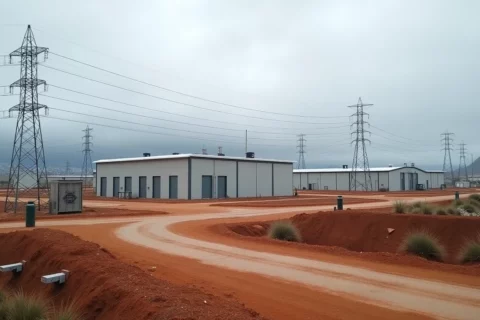

Google’s first African Digital Exchange Port will be built in the Eastern Cape. This puts the province into Google’s network map as a junction between African traffic and the Umoja subsea system, which is meant to run to Australia and, on a separate planned route, India. The province is being pulled into a traffic pattern that usually favours Cape Town and Durban, with all the commercial consequences that follow.
The real test is whether the Eastern Cape can turn that landing point into a durable digital base, with enough fibre, power, technical talent, and business gravity to keep value from leaking back to the usual hubs.
What changed
Google’s move gives the Eastern Cape a place on the map that network planners care about. Umoja is doing two things at once: it is adding an international path out of Africa, and it is tying that path to a terrestrial fibre route that runs through several countries from South Africa towards Kenya. This combination matters because subsea capacity alone does not fix a weak inland network. The cable needs land routes, and land routes need local ecosystems that can use them.
For years, the pattern has been familiar. Internet infrastructure concentrates around a few coastal landings, then the rest of the market orbits those points. A new exchange port in the Eastern Cape breaks that habit. It gives traffic another way in and out, which lowers concentration risk and reduces pressure on the existing routes that already carry too much of the load.
What it changes
Internet geography shapes economic geography more than most people admit. Firms that need fast, stable links to cloud platforms, clients, or data-heavy services do not choose locations on patriotism. They choose latency, redundancy, and cost. If Google’s port and the Umoja system make the Eastern Cape a cleaner entry point for international traffic, the province becomes more attractive to data centres, cloud operators, and digital service firms that want to sit closer to the fibre spine.
This could also change how resilience is priced. A region with only a few exposed routes is one cable cut or station failure away from trouble. A region with another landing point and a second set of paths gains routing options when something goes wrong. For banks, platforms, SaaS providers, and content networks, this means uptime, recovery, and customer trust.
There is also a wider African angle. Umoja’s inland fibre line links South Africa toward Kenya through countries that often have to route traffic through distant or congested paths. A stronger terrestrial backbone can improve regional connectivity, support lower latency, and make cross-border digital services less brittle. This creates a continent that can route more of its own traffic intelligently, rather than merely consuming bandwidth.
What could follow
The upside for the Eastern Cape depends on whether the province builds around the port instead of just hosting it. This means real investment in power, local fibre rollout, security, and the unglamorous parts of digital infrastructure that never make launch slides. It also means skills. Network engineering, cyber security, cloud operations, data analytics, and software development are the jobs that let a place keep the margin, not just the trenching contracts.
If the province gets that right, the knock-on effects are straightforward. Data centre developers start looking harder. Hyperscalers think differently about regional presence. Local startups get better connectivity and a cheaper path to scale. Disaster recovery sites become easier to justify away from the main metros. Procurement opportunities spread to local contractors and service firms.
If it gets that wrong, the Eastern Cape ends up as a neat landing point and not much else. The fibre passes through, but the value does not.
The harder question
Google has put a strategic asset into a province that has not been the centre of South Africa’s digital infrastructure story. This presents both opportunity and risk. A cable landing can redraw traffic maps quickly. Building the surrounding economy takes longer, and it depends on whether government, universities, and the private sector can move at the pace infrastructure requires.
The province now has a rare opening. The question is whether it treats the port as a destination or as the beginning of a broader industrial plan for the digital economy.