
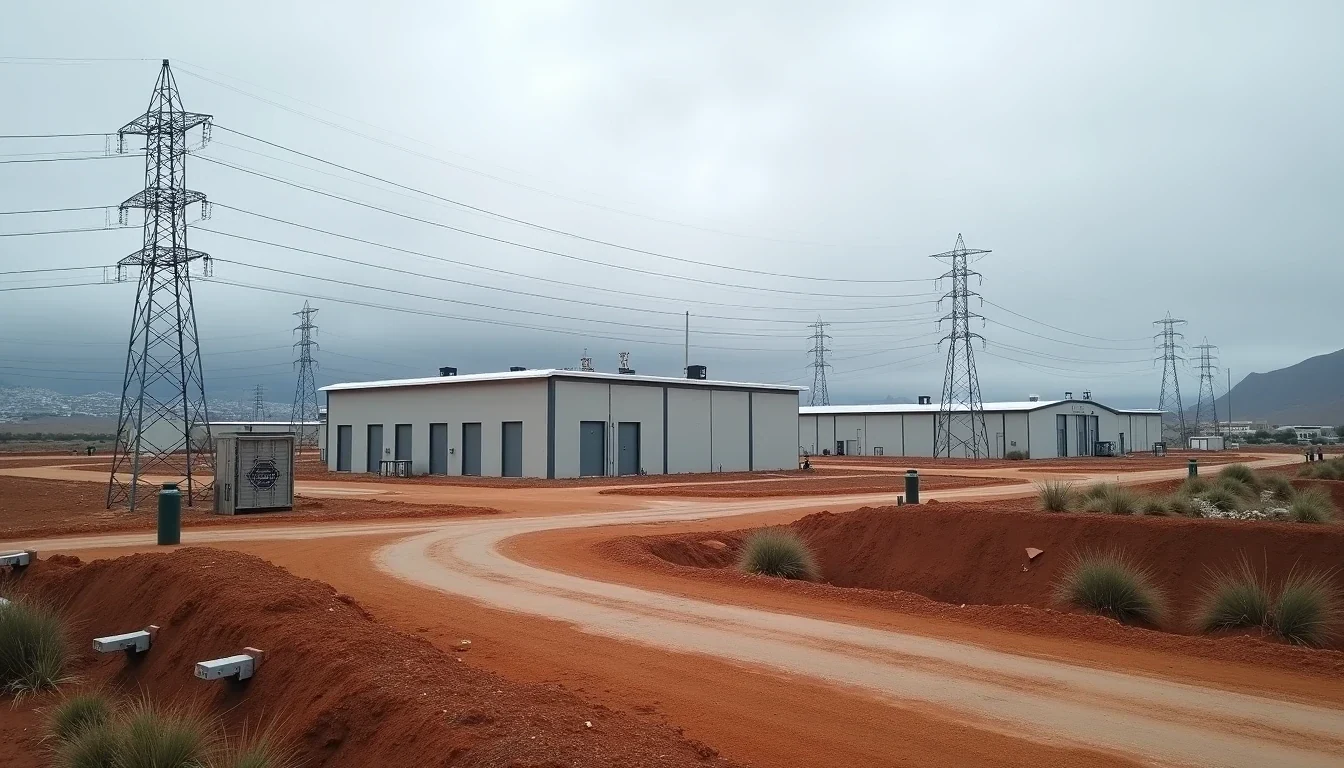
Cape Town has just shown how quickly a data-centre approval can stop looking like a property matter and start looking like a national utilities decision. Equinix’s plan for two large facilities at King Air Industria cleared the municipal appeal tribunal despite objections over electricity demand, water use and the level of environmental disclosure. Once a project is pulling at that scale, it is no longer sitting in the same category as a warehouse, a call centre or another anonymous slab of commercial floor space.
The number that should unsettle planners is 170MW. That is the estimated power draw for the two Cape Town facilities combined, a load large enough to make the project feel closer to a grid conversation than a building application. For context, Teraco says its existing South African campuses together offer roughly 189MW of critical power capacity. One new Equinix project approaches the footprint of the country’s best-known incumbent across all its current sites.
What changed
The tribunal’s approval does more than clear one developer’s path. It marks a point where the public conversation around data centres has to catch up with the scale of what is being proposed. Equinix is pursuing two major data halls in Cape Town, not a modest office park with a server room attached. Objections around electricity supply, water consumption, and the adequacy of environmental disclosure were all raised during the process.
That mix matters because each of those inputs is already under pressure. A development that needs bulk power at industrial scale competes directly with other users of the same infrastructure. Cooling systems add another layer, especially in a city that has spent the last decade living with the memory of severe water stress. When the resource question gets this large, the planning file starts to resemble a strategic infrastructure dossier.
Why it matters
Data centres have crossed a threshold. For years they were treated as specialised commercial buildings, important but still basically private real estate with a technical fit-out. That framing no longer survives contact with AI workloads and hyperscale expansion. A 170MW project competes for the same power, land, and water pipes that also have to serve homes, factories, and transport systems. It is not just serving faster cloud access or a nicer corporate IT stack.
That competition will shape where cities can grow. Industrial land near strong grid connections becomes more valuable. Water allocation gets dragged into technology policy. Electricity planners have to think about whether a data-centre cluster is the best use of scarce capacity, especially when the same grid must still support manufacturing and residential growth. Once that logic takes hold, the old assumption that a data centre belongs in the same bucket as an ordinary business park starts to look lazy.
The comparison with Teraco gives the scale real weight. Teraco’s current portfolio, spread across existing campuses, adds up to about 189MW of critical power capacity. Equinix’s Cape Town build would arrive almost at that level through a single project in one metro. This is not incremental growth. It is a jump large enough to change how developers, municipalities, and utilities talk to one another.
What cities will face next
The approval also sets a template for future arguments. If a data centre can absorb power on this scale, planning authorities will struggle to treat it like a standard commercial application. Expect more pressure for submissions to be tested against grid capacity, water availability, and long-range infrastructure plans rather than zoning labels alone.
This means municipal officials will need sharper internal coordination. Planning departments cannot assess these projects in isolation while electricity and water teams are left to deal with the aftermath. National policy will also have to do more work. If AI computing keeps expanding, South Africa will need clearer rules around energy efficiency, cooling methods, bulk supply pricing, and the conditions under which renewable generation can be tied to new digital infrastructure.
The likely result is a harder planning environment for everyone involved. Developers will face more scrutiny. Communities will push back more forcefully when local resources are already strained. Cities will need to decide whether they want data centres treated as normal commercial arrivals or as strategic infrastructure with a claim on public systems. Cape Town’s Equinix approval suggests that, once the numbers are this large, the second view is becoming unavoidable.