The Corporate Council on Africa has never before taken its flagship U.S.-Africa Business Summit to French-speaking West Africa. In 2027, Abidjan will host the gathering. This choice is not ceremonial; it is a bet on Côte d’Ivoire as the functional entry point for a region that Anglophone investors have historically treated as an afterthought.
What changed
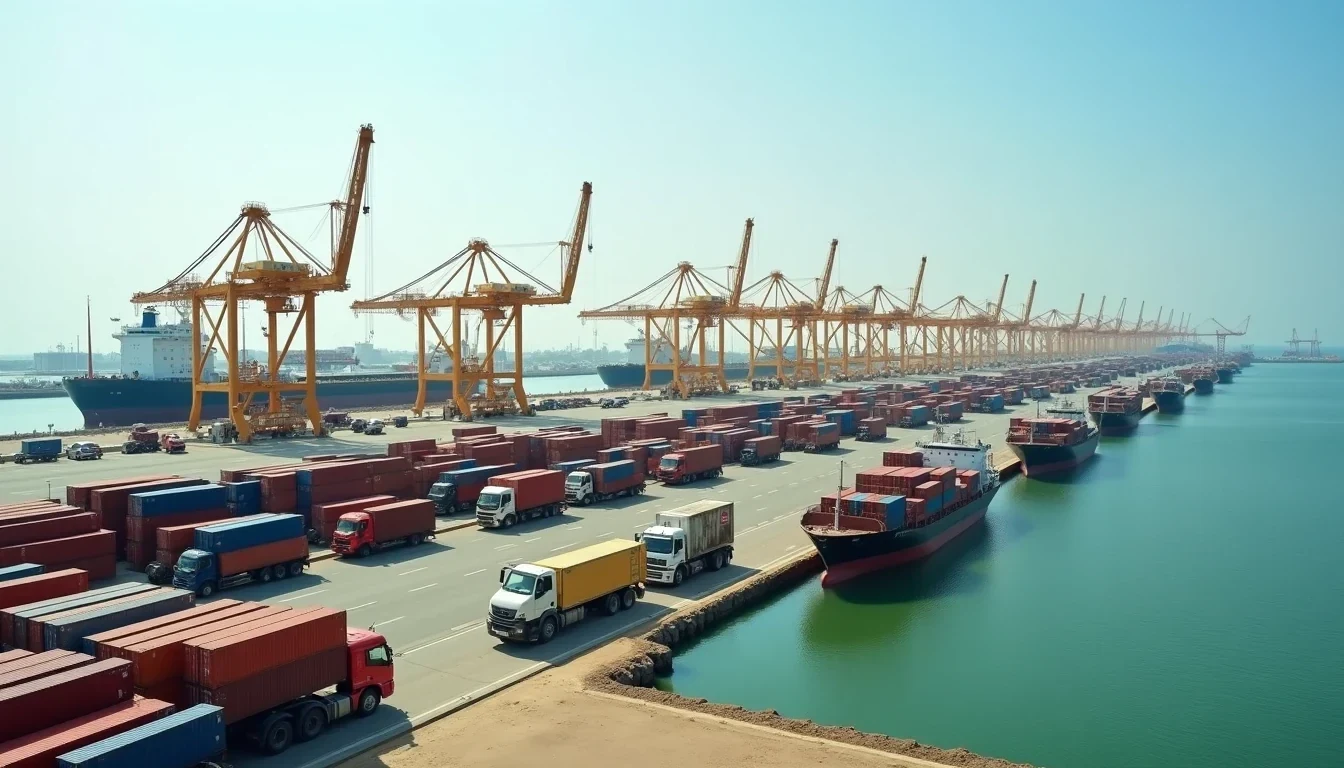
The 2023 summit in Luanda set a formidable benchmark. Nearly 2,800 participants from 85 countries attended, and the event generated upwards of $4 billion in business deals and investment commitments. These numbers established the Corporate Council on Africa’s convening power. Now the organization is redirecting that gravity toward Abidjan, a city with the largest deepwater port in West Africa and container terminal expansion already underway.
Côte d’Ivoire’s pitch rests on existing infrastructure, not just promises on paper. The Port of Abidjan’s second terminal can handle larger vessels and serves as the primary transshipment point for landlocked neighbors including Mali, Burkina Faso, and Niger. Road density in the country exceeds regional averages, and the Abidjan-Ouagadougou corridor remains one of the more reliable trade routes in a region where logistics often fracture. Electricity generation capacity also works in Côte d’Ivoire’s favor. The country exports power within the West African Power Pool, a rarity in a continent where energy deficits routinely stall industrial projects.
Policy reforms under the OHADA legal framework and updated investment codes offering tax incentives have accompanied these physical assets. One-stop shops for business creation reduced procedural friction. The result is a jurisdiction that can plausibly claim gateway status.
Why it matters
French-speaking West Africa has occupied a peculiar blind spot in U.S.-Africa commercial engagement. American investment flows have concentrated on Anglophone markets and Southern African economies, leaving a significant portion of the continent’s population and productive capacity underrepresented in transatlantic deal-making. The Abidjan summit forces a correction.
For South African businesses, this reorientation carries specific implications. Domestic market saturation and currency volatility have pushed South African capital toward regional expansion for years, but Francophone West Africa has remained difficult to penetrate. Language barriers, regulatory unfamiliarity, and the absence of established partnership networks created friction that Anglophone alternatives avoided. A validated gateway in Abidjan changes the calculation. South African expertise in financial services, telecommunications infrastructure, retail distribution, and mining logistics becomes exportable through a hub that already handles regional transshipment and maintains commercial law compatibility with wider West African frameworks.
The sectoral opportunities align with South African corporate capabilities. Côte d’Ivoire’s agribusiness sector processes only a fraction of its cocoa and cashew output domestically despite being the world’s largest producer of both. Value-addition infrastructure, cold chain logistics, and processing facilities represent gaps that South African operators have filled elsewhere on the continent. Digital infrastructure also presents openings. Submarine fiber optic cables including ACE and MainOne land in Abidjan, and internet penetration growth supports fintech and e-commerce expansion that South African platforms have already scaled in comparable markets.
What happens next
The summit’s success will not be measured by attendance figures or announcement value. The Luanda precedent established that $4 billion in commitments is achievable. The harder test is what materializes two and three years afterward.
Foreign direct investment inflows attributable to summit contacts, rather than general trend growth, will be the first indicator. More telling will be productive capacity expansion, specifically manufacturing plants and processing facilities that employ local labor and source regionally rather than importing finished goods. Job creation figures, particularly for youth employment in a country where demographic pressure is acute, will reveal whether investment structures prioritize extraction or development. Intra-regional trade volume growth between Côte d’Ivoire and its neighbors will demonstrate whether gateway rhetoric translates into integrated supply chains or merely positions Abidjan as a slightly more efficient entrepôt for external goods.
South African participation in these outcomes depends on early positioning. The firms that benefit from gateway economies are typically those that establish operational presence before the summit generates competitive bidding for local partnerships. Côte d’Ivoire’s special economic zones, including the PK24 Industrial Park, offer import-substitution and export-oriented manufacturing platforms that reward first movers with established supplier relationships and regulatory familiarity.
The 2027 summit is less a destination than a deadline. Businesses that treat it as a calendar marker for completed market entry, rather than an exploratory event, will capture the structural shift it represents. Those that arrive in Abidjan seeking introductions without prepared operations will find the gateway already occupied.